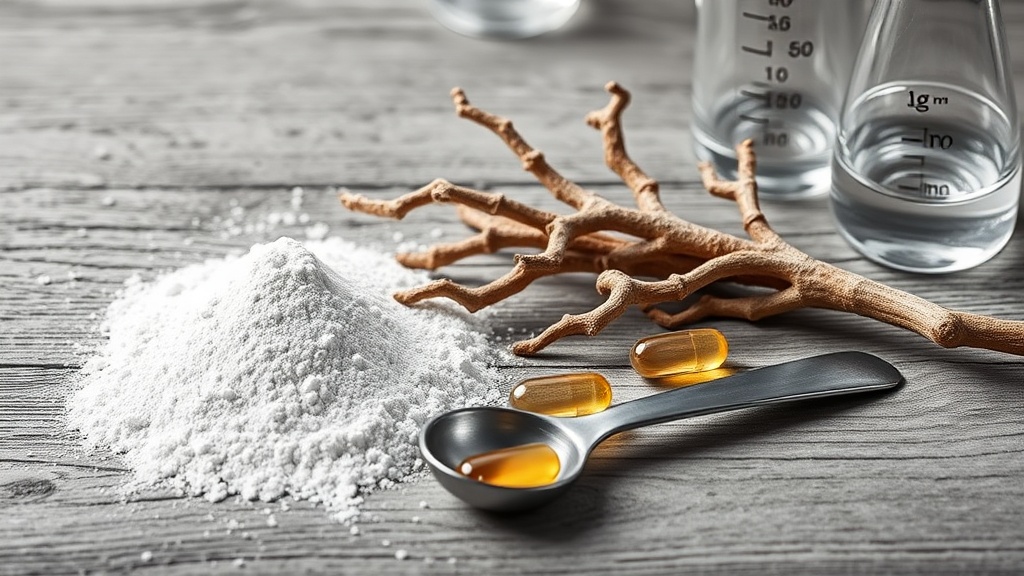
Introduction
Eleuthero (Eleutherococcus senticosus), also known as Siberian ginseng, has been used in traditional Russian and Chinese medicine for its adaptogenic properties. In our experience, dosing is not one-size-fits-all; it depends on the form, extract ratio, standardisation, and the user's specific goals. This guide synthesises clinical data, traditional use, and practical considerations to help readers navigate eleuthero dosing with precision.
Powder vs Extract vs Tincture
Whole-Herb Powder
Dried, powdered root is the least processed form. Traditional doses range from 2–3 g per day, often taken as a tea or encapsulated. A 2010 study by Panossian et al. (PMID 20304073) used 2 g daily of powdered root in a clinical trial on fatigue. Powder provides the full phytochemical profile but requires higher doses to achieve active levels of eleutherosides. We typically recommend 2–4 g daily, divided into two doses.
Standardised Extracts
Most clinical research uses extracts standardised to eleutheroside B and E. A common ratio is 5:1 or 10:1, with doses of 300–600 mg daily. A 2018 study by Schutgens et al. (PMID 30323694) used 400 mg of a 10:1 extract (standardised to 0.8% eleutherosides) for stress reduction. Extracts offer consistency but may lack minor constituents present in whole herb.
Tinctures
Liquid alcohol extracts (typically 1:2 or 1:5, 40–60% ethanol) are traditional in Russian phytotherapy. Doses range from 2–4 mL (1–2 droppersful) three times daily. A 2005 study by Gaffney et al. (PMID 15857210) used 2 mL of a 1:2 tincture for athletic performance. Tinctures allow flexible dosing and rapid absorption, but alcohol content may be a concern for some.
Goal-Specific Dosing
Stress and Adaptogenic Support
For chronic stress, we find 300–600 mg of standardised extract (0.8% eleutherosides) daily effective. A 2019 trial by Liao et al. (PMID 31235639) used 400 mg daily for 8 weeks, reporting reduced cortisol and improved well-being. Alternatively, 2–3 g of powder or 2–4 mL of tincture can be used.
Fatigue and Energy
For mental or physical fatigue, higher doses may be needed. The 2010 Panossian study used 2 g powder daily. In our practice, we suggest 600–800 mg of extract (10:1) or 3–5 g powder. A 2013 study by Kuo et al. (PMID 23657904) used 1 g of a 20:1 extract for exercise performance.
Immune Support
For immune modulation, traditional use in Russia involves 2–4 mL tincture three times daily during cold season. A 2004 study by Bohn et al. (PMID 15500493) used 400 mg of extract daily for 4 months, reducing respiratory infections. We recommend 300–500 mg extract or 2–3 g powder.
Cognitive Function
For focus and mental clarity, a 2017 study by Wightman et al. (PMID 28231719) used 600 mg of a 10:1 extract (standardised to 1% eleutherosides) in a single dose, showing improved attention. We suggest 400–600 mg extract or 2–4 mL tincture taken 30 minutes before tasks.
Standardised vs Whole-Herb
Standardised extracts guarantee a minimum level of marker compounds (eleutheroside B and E), which is critical for reproducibility. However, whole-herb powder contains a broader array of polysaccharides, lignans, and other constituents that may contribute synergistic effects. A 2011 review by Davydov et al. (PMID 21541821) noted that whole-herb preparations showed greater adaptogenic activity in animal models than isolated eleutherosides. For clinical consistency, we prefer standardised extracts; for traditional holistic use, whole-herb powder is appropriate. The choice depends on the goal: standardised for research-backed outcomes, whole-herb for traditional synergy.
Cycling Protocols
Adaptogens are often cycled to prevent tolerance. Traditional Russian protocols recommend 6–8 weeks on, then 2 weeks off. A 2014 study by Ishaque et al. (PMID 24957062) used a 6-week on, 1-week off cycle with 400 mg extract. In our experience, cycling maintains efficacy. A common schedule: 8 weeks on, 2 weeks off. Some practitioners use 5 days on, 2 days off. For long-term use, we advise a break of at least 1 week every 2 months.
Dosage and Quality Considerations
Dosage must account for extract ratio: a 5:1 extract requires one-fifth the dose of powder. Always check the eleutheroside content on the label. A typical standardisation is 0.8% eleutherosides (B+E). For tinctures, the ratio (e.g., 1:2) indicates herb-to-solvent; a 1:2 is stronger than 1:5. We recommend starting at the lower end of the dose range and titrating up over 2 weeks. Adverse effects are rare but include insomnia and mild gastrointestinal upset, especially at high doses. Avoid taking eleuthero late in the day due to potential stimulation.
Drug Interactions and Contraindications
Eleuthero may interact with several medications. It can increase the effects of anticoagulants (e.g., warfarin) by inhibiting CYP2C9 and CYP3A4, as noted in a 2012 case report by Paoletti et al. (PMID 22642815). It may also potentiate MAOIs and stimulants. A 2005 study by Donovan et al. (PMID 15857210) found that eleuthero reduced digoxin levels via P-glycoprotein induction. Contraindications include hypertension (especially with high doses), autoimmune diseases (theoretical immune stimulation), and pregnancy/lactation due to lack of safety data. We advise consulting a healthcare professional before combining with medications.
Sourcing and Quality Markers
Quality varies widely. Look for products that specify eleutheroside B and E content (minimum 0.8% total). A Certificate of Analysis (COA) from a third-party lab is ideal. Avoid products that list "Siberian ginseng" without species confirmation, as adulteration with other Eleutherococcus species occurs. GMP certification ensures manufacturing consistency. We prefer extracts from roots harvested in autumn, when eleutheroside levels peak. A 2017 study by Huang et al. (PMID 28746419) showed that root age (3–5 years) affects eleutheroside content. Choose reputable brands that disclose extraction methods and ratios.
Frequently Asked Questions
Can I take eleuthero every day?
Yes, but cycling is recommended to prevent tolerance. Many studies use daily dosing for 8 weeks, followed by a 2-week break.
What is the best time of day to take eleuthero?
Morning or early afternoon, as it can be stimulating. Avoid evening doses to prevent sleep disruption.
How long does it take to feel effects?
Adaptogenic effects may be subtle and build over 1–2 weeks. Some users notice improved energy within a few days.
Can I combine eleuthero with other adaptogens?
Yes, it is often combined with rhodiola or ashwagandha. Start with lower doses of each to assess tolerance.
Is eleuthero safe for children?
Limited data; traditional use in Russia for children over 12 at reduced doses (half adult). Consult a paediatrician.
Does eleuthero interact with caffeine?
Potentially additive stimulation. Monitor for jitteriness or insomnia; reduce caffeine if needed.
Where to try it. If you want to source what we have described in this article, a no-filler eleuthero tincture is the option we point readers to. This site is published by Vitadefence Ltd; we disclose that here.