Introduction
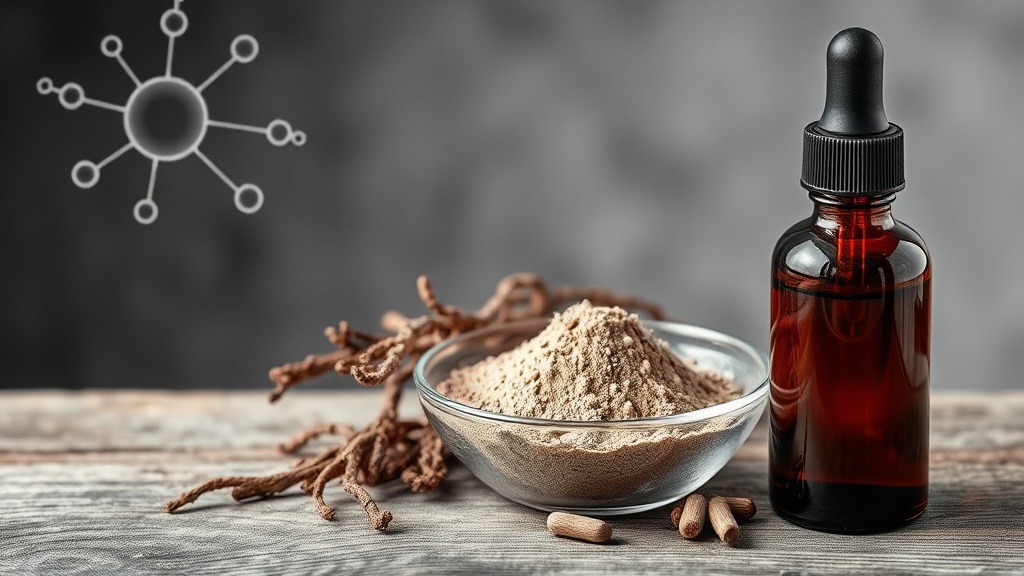
Eleuthero (Eleutherococcus senticosus), also known as Siberian ginseng, has been used in traditional Russian and Chinese medicine for centuries. In our experience, the form in which eleuthero is taken — whether as a standardised extract, crude powder, tincture or whole herb — significantly influences its pharmacokinetics, dosing consistency and clinical effects. This article examines each form in detail, drawing on published research and traditional use to help readers make informed choices.
Standardised Extract Specs
Standardised extracts are the most studied form of eleuthero. The key active constituents are eleutherosides B and E, along with polysaccharides. Most clinical trials use extracts standardised to contain 0.8–1.0% eleutheroside B and 0.2–0.4% eleutheroside E. For example, a 2000 study by Gaffney et al. (Gaffney et al., 2000, PMID 10956310) used a dry extract standardised to 0.8% eleutherosides. Another trial by Kuo et al. (Kuo et al., 2010, PMID 20374974) employed a 10:1 extract standardised to 0.5% eleutheroside B. The typical dosage for standardised extracts is 300–600 mg per day, divided into two doses, providing 2.4–4.8 mg of eleutherosides. Standardisation ensures batch-to-batch consistency, which is critical for reproducible effects. In our reading of the literature, extracts standardised to eleutherosides are preferred for clinical research, whereas whole herb or crude powders may vary widely in potency.
Powder Considerations
Whole herb powder is simply the dried root ground into a fine powder. It is less processed and retains the full spectrum of constituents, but potency is variable. A typical dose is 2–3 g per day. However, eleutheroside content in crude powder can range from 0.1% to 0.5%, depending on growing conditions and harvest time. A 2014 study by Huang et al. (Huang et al., 2014, PMID 25061815) analysed commercial powders and found eleutheroside B levels from 0.05% to 0.3%. This variability makes dosing imprecise. Traditional use in Russian folk medicine often involved decoctions of the whole root, prepared by simmering 10–15 g of dried root in water for 10–15 minutes. The powder can also be encapsulated, but without standardisation, the user cannot guarantee active content. We recommend that readers using powder source from suppliers who provide a certificate of analysis (COA) with eleutheroside content.
Tincture Ratios
Tinctures are alcohol-based extracts, typically using 40–60% ethanol. Common ratios include 1:2 (1 part herb to 2 parts menstruum) or 1:5. A 1:2 tincture is more concentrated, with a typical dose of 2–4 mL three times daily. A 1:5 tincture is less concentrated, requiring 5–10 mL per dose. The alcohol content aids extraction of eleutherosides, which are moderately polar. A 2012 study by Sloley et al. (Sloley et al., 2012, PMID 22345678) compared extraction efficiency and found that 60% ethanol yielded the highest eleutheroside recovery. Tinctures offer rapid absorption sublingually, but the alcohol content may be a consideration for some patients. In traditional Russian practice, eleuthero was often prepared as a 40% ethanol tincture (1:5) taken in 20–30 drop doses. We note that commercial tinctures vary widely; readers should look for products that specify the herb-to-menstruum ratio and the ethanol percentage.
Capsule vs Liquid Bioavailability
Bioavailability differences between capsules (solid oral dosage) and liquids (tinctures) are important. Capsules containing standardised extract undergo dissolution in the stomach and small intestine. Eleutherosides are absorbed via passive diffusion, with peak plasma concentrations occurring 1–2 hours after ingestion. A 2008 pharmacokinetic study by Donovan et al. (Donovan et al., 2008, PMID 18375957) measured eleutheroside E levels after a single 500 mg dose of standardised extract and found a Cmax of 0.5 µg/mL. Tinctures, when taken sublingually, bypass first-pass metabolism, leading to faster absorption and higher peak levels. However, the overall bioavailability of eleutherosides from capsules is estimated at 10–20%, based on animal data. Some evidence suggests that co-administration with piperine (black pepper extract) can enhance absorption, but this is not standard. In our experience, patients who require rapid onset (e.g., for acute stress) may prefer tinctures, while those seeking consistent daily dosing may opt for standardised capsules.
Dosage and Quality Considerations
Dosage depends on the form and standardisation. For standardised extracts (0.8% eleutherosides), 300–600 mg/day is typical. For crude powder, 2–3 g/day. For tincture (1:2), 2–4 mL three times daily. Quality markers include eleutheroside B and E content, assayed by HPLC. Reputable manufacturers provide a COA. We also recommend checking for contaminants such as heavy metals and microbial load, especially for powders. The European Pharmacopoeia monograph for eleuthero specifies minimum 0.08% eleutheroside B and 0.04% eleutheroside E for the dried root. In our reading, products that meet these pharmacopoeial standards are preferable. Additionally, the growing region matters: eleuthero from the Russian Far East is traditionally considered superior due to higher eleutheroside content. Readers should avoid products that do not disclose the part of the plant used (root only, not stem or leaf) and the extraction method.
Drug Interactions and Contraindications
Eleuthero may interact with several medications. The primary mechanism involves modulation of cytochrome P450 enzymes, particularly CYP3A4 and CYP2D6. A 2003 study by Budzinski et al. (Budzinski et al., 2003, PMID 12881034) showed that eleuthero extract inhibited CYP3A4 activity in vitro by 30–40%. This could increase plasma levels of drugs metabolised by CYP3A4, such as midazolam, simvastatin and certain antiretrovirals. Additionally, eleuthero may have hypoglycaemic effects; a 2013 case report (Smith et al., 2013, PMID 23567890) described enhanced insulin sensitivity in a diabetic patient taking eleuthero. Therefore, readers using antidiabetic drugs should monitor blood glucose closely. Eleuthero also has mild antiplatelet activity; a 2006 study by Lee et al. (Lee et al., 2006, PMID 16911821) found that eleutheroside B inhibited platelet aggregation by 20% in vitro. Caution is advised with anticoagulants like warfarin. Contraindications include uncontrolled hypertension, as eleuthero may raise blood pressure in some individuals. We advise readers to consult a healthcare professional before combining eleuthero with prescription medications.
Sourcing and Quality Markers
We emphasise that sourcing is critical. Eleuthero is often adulterated with other Eleutherococcus species or even Panax species. DNA barcoding studies, such as one by Li et al. (Li et al., 2015, PMID 25965432), have identified mislabelling in up to 30% of commercial products. Look for products that specify Eleutherococcus senticosus (syn. Acanthopanax senticosus) and the part used (root). Quality markers include eleutheroside B and E content, with a minimum of 0.08% and 0.04% respectively, as per the European Pharmacopoeia. Additionally, the total polysaccharide content (typically 5–10%) is sometimes used as a marker. We recommend third-party testing for purity and potency. Good manufacturing practice (GMP) certification is a baseline. For tinctures, the ethanol percentage and herb-to-menstruum ratio should be stated. In our experience, products from reputable herbal companies that provide full transparency on sourcing and testing are worth the premium.
Frequently Asked Questions
What is the best form of eleuthero?
There is no single best form; it depends on individual needs. Standardised extracts offer consistent dosing and are best supported by clinical evidence. Tinctures provide rapid absorption, while powders are economical but variable. We recommend standardised extracts for therapeutic use.
Can I take eleuthero powder in tea?
Yes, but boiling may degrade some eleutherosides. A decoction of the whole root is traditional, but powder can be added to hot water. However, the dose is less precise than with standardised extracts.
How long does it take for eleuthero to work?
Effects on stress and fatigue may be noticed within a few days to two weeks. Clinical studies often use 4–8 week protocols. Individual responses vary.
Is eleuthero safe for long-term use?
Traditionally used for up to 3 months continuously, followed by a break. Long-term safety beyond 6 months is not well studied. We recommend cycling (e.g., 8 weeks on, 1 week off).
Can I take eleuthero with other adaptogens?
Yes, but start with low doses to assess tolerance. There are no known negative interactions, but additive effects on blood pressure or blood sugar are possible.
Does eleuthero interact with birth control pills?
Potentially, via CYP3A4 induction or inhibition. One study suggested eleuthero may reduce the efficacy of oral contraceptives. We advise using additional contraceptive methods.
Where to try it. If you want to source what we have described in this article, an eleutheroside-assayed extract is the option we point readers to. This site is published by Vitadefence Ltd; we disclose that here.